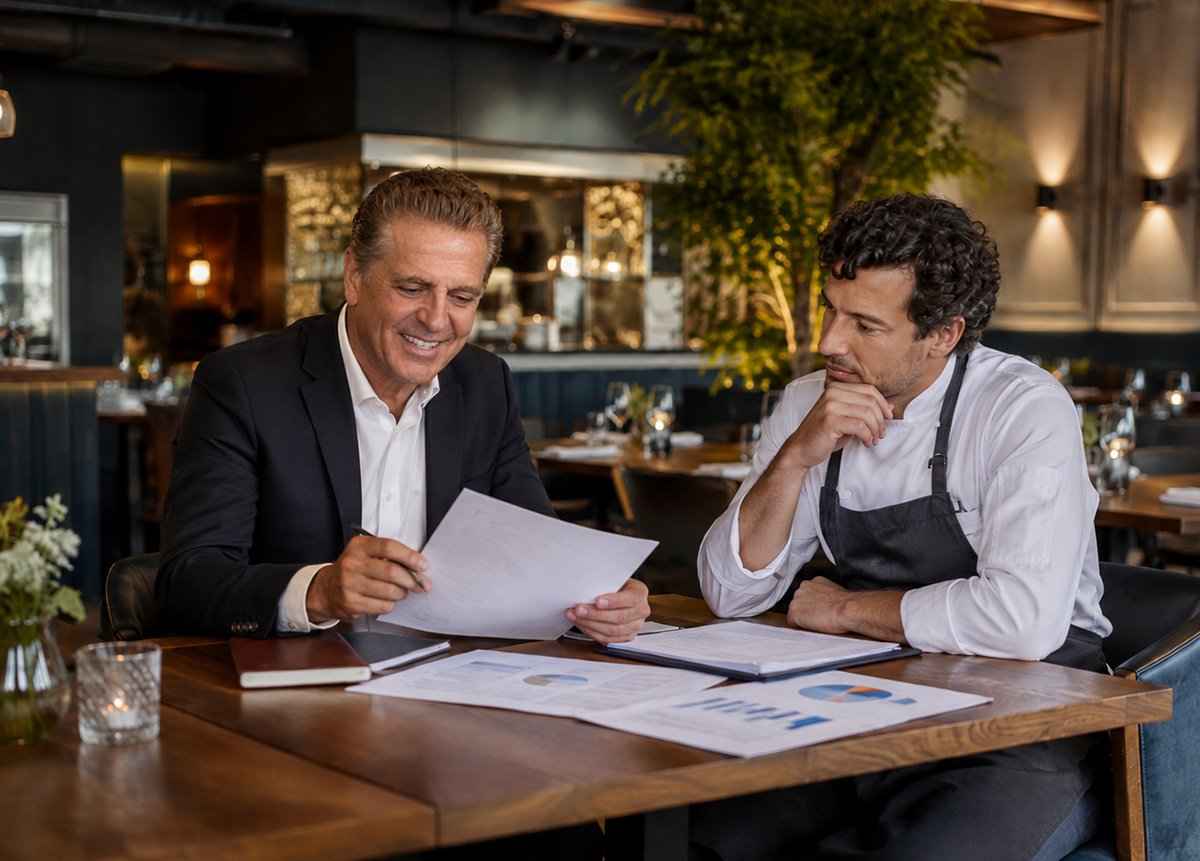
Buying or Selling a Restaurant?
Ken is a licensed broker with years of experience in restaurant transactions, having brokered the buying and selling of individual as well as multi-unit concepts. He stays involved from establishing valuation, developing the purchase and sale agreement, due diligence, and transferring the liquor license, through the closing of escrow.
There are more restaurants on the market than any other type of business. Whether you're buying or selling, his expertise can help you achieve maximum value. Key points in any successful restaurant sales transaction:
The Location
Unless a restaurant has a long-established history, location often plays a significant role in its success. Traffic may be driven by proximity to office workers, a movie theatre, malls, or a general high-traffic location. Analyzing this site-specific information is crucial to making the right offer.
The Lease
Landlords are being very difficult and cautious about assigning a lease to a new restaurant buyer. Assignment language is very important to the seller (can add value) and the buyer (determines whether a transaction is possible). Sophisticated landlords may refuse assignment unless the buyer has prior experience, or may require the former owner to remain on the lease. Ken addresses this portion of the lease first; contracts should include a condition/contingency that the lease be assigned or a new satisfactory lease obtained. A professional presentation by the buyer to the landlord is critical.
Valuating a Restaurant Business for Sale
Two primary methods: Asset-Based, or Seller's Cash Flow by a multiple formula. Asset-based is used for an unprofitable or closed restaurant, with a reasonable valuation of equipment. For an ongoing operation, a multiple of the net income (EBITDA) is best used. In a case where sales and profit are increasing year over year multiples of 3 to 7 times net income can be used to determine value. Other factors that have to be considered are length of term left on the lease, annual rent increase, and option periods for extending the lease.
Dealing with Cash Sales / Unreported Income
There has been a tremendous amount of unreported income in the industry, especially in individually owned restaurants. If the seller can't prove the total profit, they shouldn't be paid for it. Food, labor, and rent (occupancy) costs are the key considerations. As a general rule, combined prime costs should not exceed 65% (cost of goods 30–35%, labor 20–25%, rent 6–10% of total revenue). This varies from fast food to fine dining.
Due Diligence
Ken spends time with the client, seller, and the seller's accountant/bookkeeper to verify all revenue and expenses in the P&L, and reviews the physical facility and FF&E. This is typically done over a short period (about 45 days) and usually requires outside help. The seller should have all required information ready (lease, at least 3 years of verifiable financials, CPA's tax information, etc.) as the due diligence clock starts.
Other Considerations
- Make sure there are no unresolved health department compliance issues
- Ask for full disclosure of any and all legal matters associated with the restaurant
- Ask for the past 3 years of tax returns from the entity that owns the restaurant
- Make sure all sales, income, and any taxes are paid in full